

Why 85% of Companies Aren’t Ready for AI in Recruitment
Reflections from my presentation at HV Capital’s Talent Summit, July 4th, 2025
But – we’re automating broken processes and calling it innovation.
While employees are using AI 3x more than leaders realize, only 22% of companies have moved beyond proof-of-concept, and just 4% are creating substantial value.
Meanwhile, the hidden costs of poor recruitment processes are staggering, unstructured interviews alone can cost 30-50% of an employee’s annual salary in bad hires.
The Foundation Problem you choose to ignore
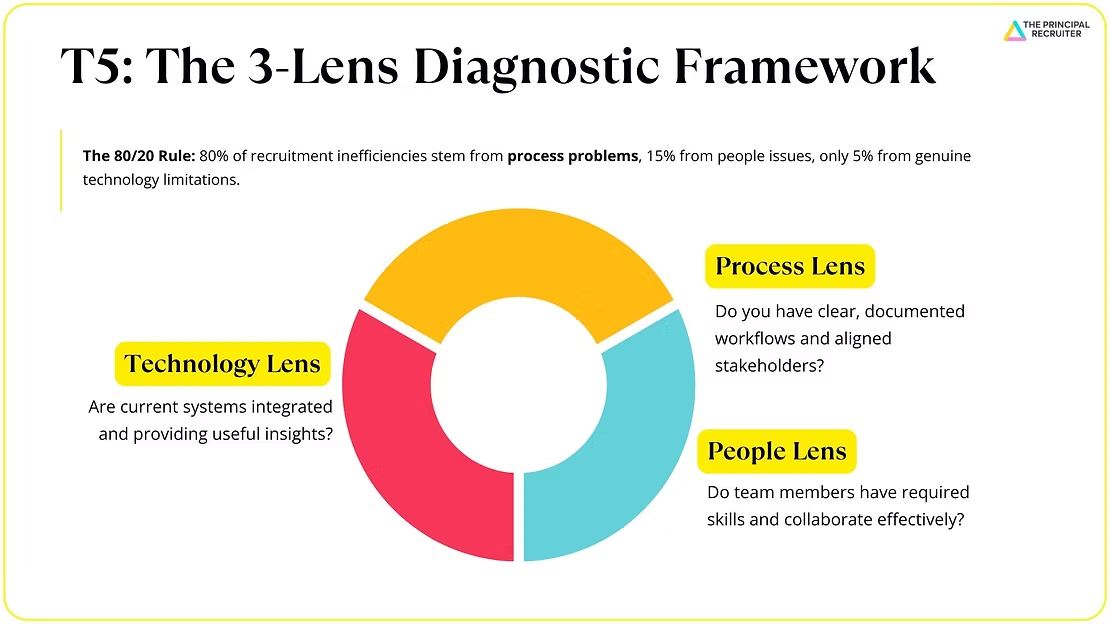
I introduced what I call the 80/20 Reality Check: 80% of recruitment inefficiencies stem from broken processes, 15% from people issues, and only 5% from genuine technology limitations.
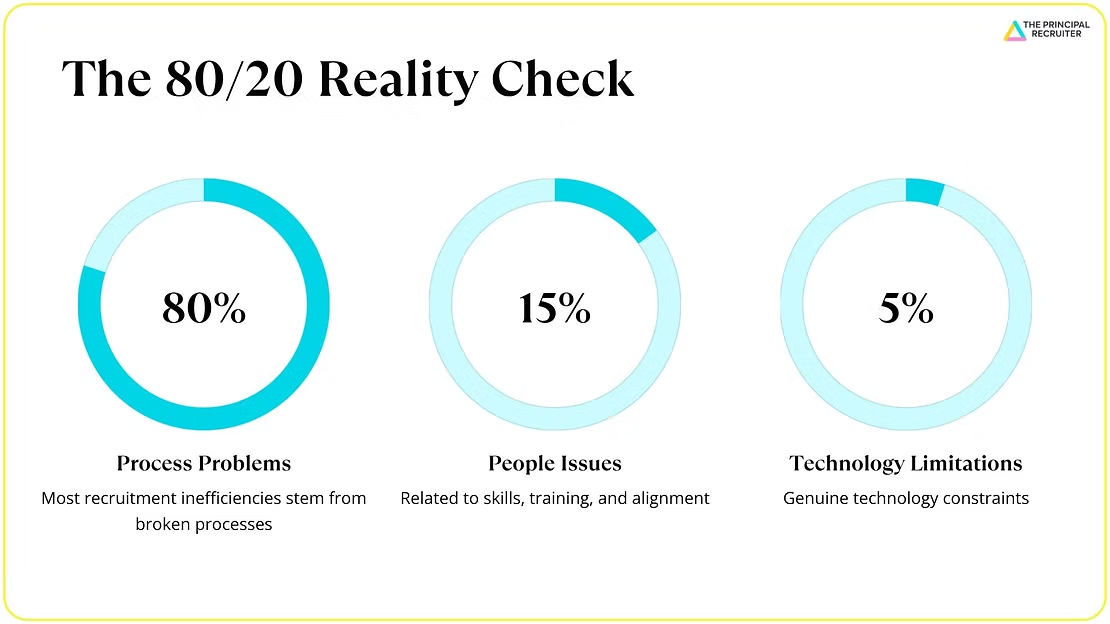
Yet most companies today are rushing straight to AI solutions or automation, without addressing the fundamental gaps in their recruitment operations.
This mirrors perfectly what Soeren Winter observed in his recent piece about AI-enabled workforces, that AI can compress the traditional link between people, productivity, and profit, but only when wielded with intent.
The key word here is intent. Without solid foundations, AI doesn’t accelerate success.
The €1.2M Question Every Leader Should Ask
Talent Leaders ask: “Should we implement AI in our recruitment process?”
The right question would be: Are you ready for AI implementation?
Through research and diagnostic work, it has been identified that 85% of organisations aren’t ready for AI implementation. They’re trying to solve process problems with technology solutions, leading to:
- Legal risks: Automated discrimination and compliance violations
- Talent loss: Qualified candidates screened out by faulty systems
- Team chaos: Technology dependency without proper foundations
- Reputation damage: Poor candidate experiences shared online
The 5-Pillar Readiness Framework
At the summit, I walked the audience through our AI-Ready Recruitment Diagnostic, which evaluates organisations across five critical areas:
1. Process Foundation
Are your recruitment workflows clearly defined and consistently documented? Do you have structured intake processes with hiring managers and standardised evaluation criteria?
2. Team Capability
Can your people manage AI effectively? Do they understand data analysis, bias recognition, and have the fundamental recruitment skills that remain essential even as technology evolves?
3. Data Infrastructure
Is your information AI-ready? Clean, reliable data is the foundation of any successful AI implementation. Poor data equals poor outcomes.
4. Stakeholder Alignment
Are your hiring managers trained, engaged, and aligned with your recruitment processes? AI will really not fix poor stakeholder management or lack of alignment.
5. Compliance Framework
Are you legally protected? AI amplifies legal risks, so your compliance foundation must be bulletproof.
The Governance Crisis
73% of organisations are rushing to AI without foundations, and 47% face legal or regulatory issues due to inadequate governance preparation.
During my session, I introduced the 4-Pillar Compliance Framework that every organisation must implement before touching AI:
Human-in-the-Loop Mandate
Every AI recommendation must have documented human review. Final hiring decisions remain exclusively human responsibility.
Prohibited Applications
No facial or tone analysis in interviews. No personality profiling without clear, legally defensible criteria. The EU AI Act isn’t a suggestion! It-Is-A-LAW.
Data and Consent Management
Right-to-explanation protocols aren’t optional. No personal social media scraping! Clear data usage documentation for every candidate interaction.
Transparency Requirements
Candidates must be informed when AI is used. Decision-making processes must be explainable. Regular bias audits are required, not recommended.
The Compliance Blindspot
I also shared what I call the “3 Critical Risk Categories”:
- Legal and Compliance Risks: Illegal auto-rejections, banned profiling, lack of auditability.
- Operational Risks: Data gaps excluding talent, bias echo chambers, missing soft skills assessments.
- Strategic Risks: Tool dependency, misaligned investments, skill atrophy.
The Human-AI Collaboration Model
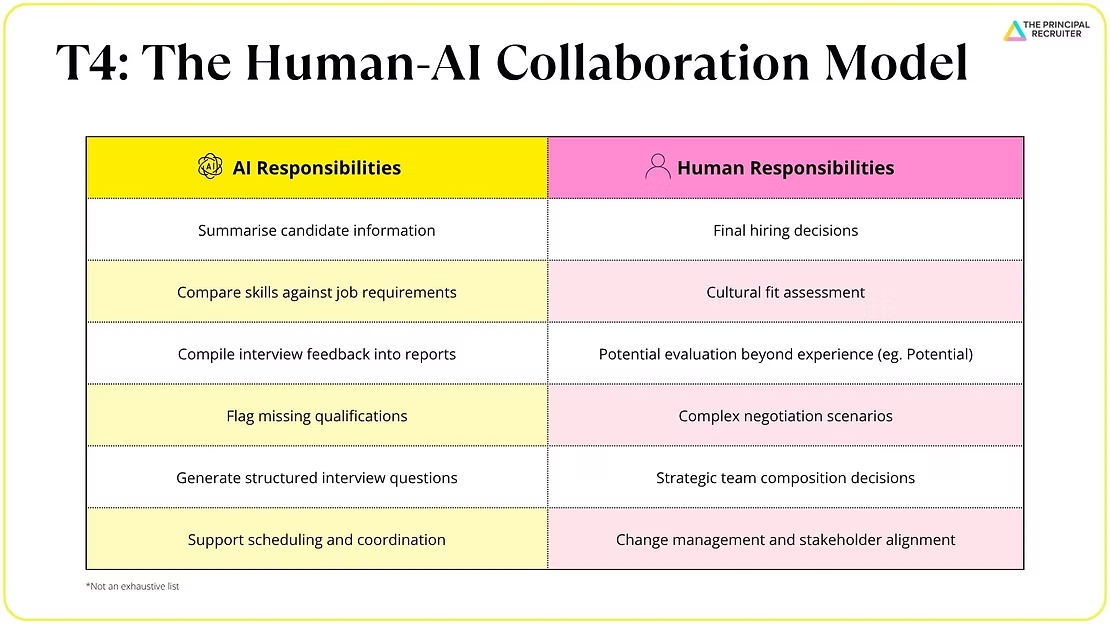
We can build a clear division of responsibilities between AI and humans.
While AI can summarise candidate information, compare skills against job requirements, and generate structured interview questions, humans must retain ownership of final hiring decisions, cultural fit assessments, and complex negotiation scenarios.
The 3-Phase Implementation Roadmap
For organisations ready to move forward, there is a simple and practical roadmap:
Phase 1: Build Operational Foundations
- Standardise and document recruitment workflows
- Ensure clean, integrated, compliant data infrastructure
- Define governance, ownership, and privacy requirements
- Establish clear KPIs for adoption and ROI
Some will smirk at these and think “pf, this is 2015 stuff”. Yes, it is 2010 stuff actually. But do you have it?
Phase 2: Enable Organisational Readiness
- Upskill teams on AI use, ethics, and bias recognition
- Align stakeholders with clear roles and accountability
- Develop oversight, quality control, and audit mechanisms
- Address change management and adoption planning
Phase 3: Integrate AI & Scale
- Pilot low-risk, high-value use cases
- Embed compliance and governance checkpoints
- Monitor impact against defined KPIs
- Scale gradually with continuous improvement
Building AI-Ready Organisations
The message I left the HV Capital audience with is simple: AI is not a quick fix for broken recruitment. Companies advancing too quickly see 40% higher implementation failure rates and 60% more compliance issues.
Instead, we need to embrace what I call “the patience framework”, building solid foundations before adopting AI, defining clear governance and compliance frameworks, investing in human capabilities that AI can’t replace, and starting simple while monitoring impact.
Preparation means more than just buying the latest AI tool, it means building recruitment systems that deliver measurable results through a combination of human expertise and intelligent automation.
The organisations that will thrive in the AI era aren’t the ones with the most advanced tools, they’re the ones with the strongest foundations, the most skilled teams, and the most robust governance frameworks.
So please answer this question for yourself: If you implemented AI in your recruitment process tomorrow, would you be creating competitive advantage or legal liability?
If you want access to an AI Readiness Handbook (Diagnostic tool) for free, please head over to our Solutions page and submit your details.